




![[2026] PAISEEC D3|Mobility Scooter for Easy Everyday Travel](http://www.paiseec.com/cdn/shop/files/d3_4a4ccb22-9e26-449e-8094-71f3ec4177c3.png?v=1782115044&width=180)

















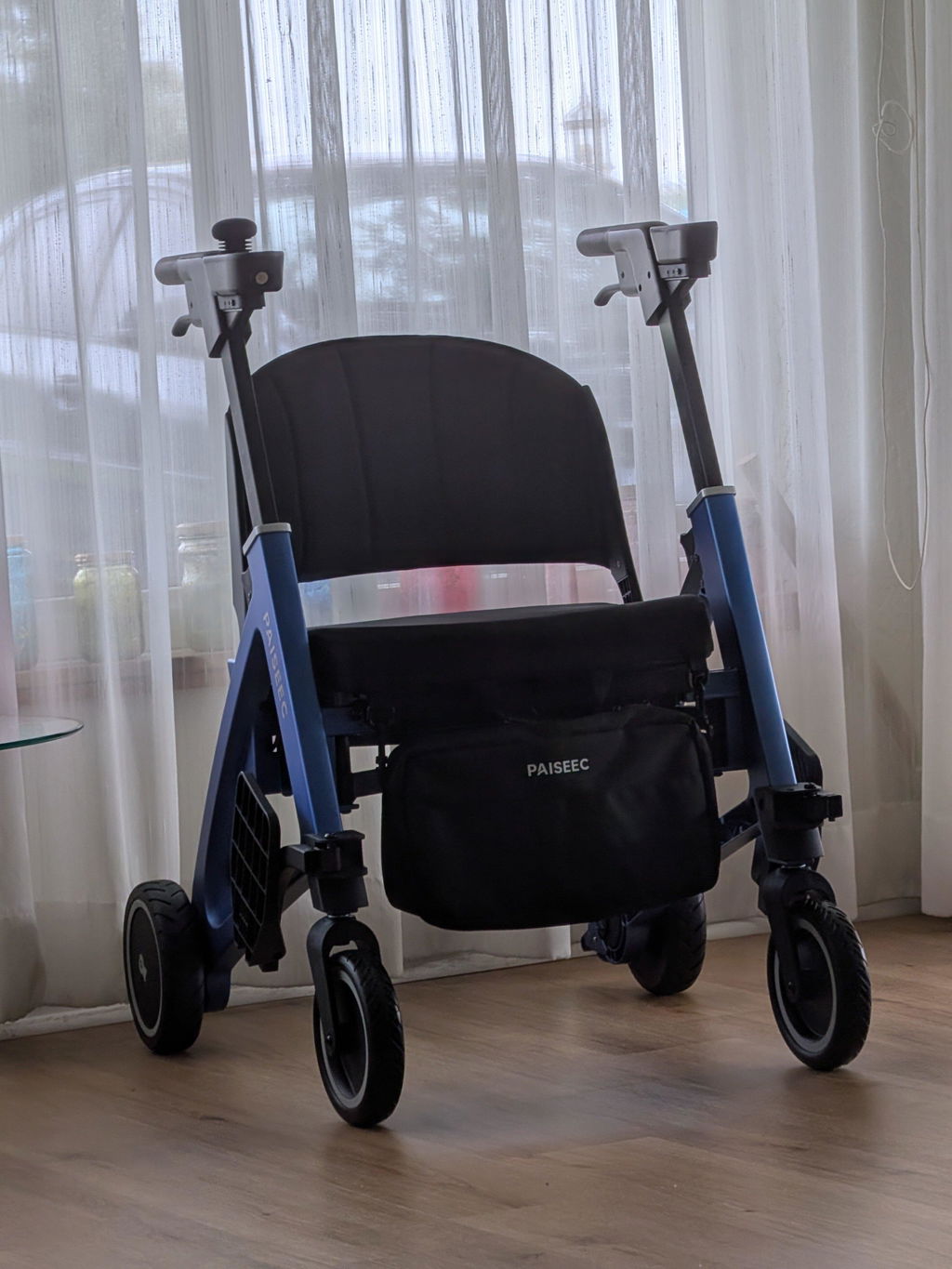
A 2-in-1 electric wheelchair rollator combines a supportive walker with a powered seated mobility option. It helps users walk when they feel capable, sit when tired, and travel farther with motor assistance. The right model should fit the user’s strength, body size, home environment, transportation routine, daily terrain, and safety needs.
What Do Buyers Need From a Hybrid Mobility Device?
Buyers usually need a device that supports both independence and flexibility. A hybrid model should help users walk safely, rest comfortably, and transition to powered mobility without carrying a separate walker and wheelchair.
The strongest products solve a common real-world problem: mobility is not the same all day. A user may walk comfortably from the bedroom to the kitchen, then struggle with fatigue during a medical appointment, shopping trip, or outdoor event.
A well-designed electric rollator wheelchair should support three essential activities:
-
Walking with stable hand support
-
Resting safely during fatigue or discomfort
-
Riding with controlled powered assistance when walking becomes difficult
Important buying priorities include folding ability, seat comfort, braking performance, battery reliability, turning space, weight capacity, and caregiver usability. The product should also fit through common doorways, load into a vehicle, and operate predictably in everyday environments.
How Does a 2-in-1 Electric Wheelchair Rollator Work?
A 2-in-1 electric wheelchair rollator works as a walking aid first and a seated mobility device when needed. Users typically lock the brakes, position the backrest and footrests, sit securely, and activate powered operation through a joystick, controller, or caregiver control system.
In rollator mode, the frame supports balance and upright posture. Adjustable handles allow users to keep their shoulders relaxed rather than bending forward excessively. Hand brakes help manage speed, while parking brakes keep the device stable before sitting down.
In wheelchair mode, the user sits on the padded seat and places their feet on the footrests. Depending on the design, the device can be moved by a caregiver or driven with electric motor assistance.
The conversion process should be simple enough for the intended user. Users with arthritis, reduced grip strength, tremor, or balance concerns should avoid models with stiff latches, difficult footrests, or complicated seat adjustments.
A good practical test is whether the user can safely move from walking mode to seated mode without needing to bend deeply, twist awkwardly, or stand unsupported.
Why Does a Hybrid Rollator Support Greater Independence?
A hybrid rollator supports independence because it allows users to keep walking while providing a backup option when fatigue, pain, distance, or uneven terrain makes walking unsafe. It reduces the need to choose between a basic walker and a full-time wheelchair before leaving home.
For many users, the greatest benefit is confidence. People often avoid shopping, family events, appointments, and travel because they worry about becoming too tired to return home safely.
A hybrid design helps remove that concern. The user can walk during the first part of an outing, rest when needed, and use motorized support if their energy declines.
Paiseec develops mobility solutions for these changing daily conditions. Rather than treating walking and riding as separate needs, Paiseec focuses on devices that support users through the full rhythm of an outing.
Which Safety Features Matter Most?
The most important safety features include reliable hand brakes, secure parking locks, stable wheel geometry, anti-tip support, secure footrests, smooth speed control, battery protection, visible status indicators, and an easy emergency stopping method.
Hybrid mobility devices require both mechanical and electronic safety systems.
Mechanical Safety
In rollator mode, users need confidence that the frame will remain stable while walking, turning, stopping, and sitting. Brake levers should be easy to reach and operate. Parking brakes should hold the device securely before the user transfers onto the seat.
Poor brake adjustment is a common source of instability. If one brake grips earlier than the other, the device may pull sideways. If the parking lock does not fully engage, the device may shift during a seated transfer.
Powered Safety
Powered operation requires controlled acceleration, predictable braking, stable steering, and battery monitoring. A mobility device should start gradually at low speed rather than moving suddenly when the joystick is engaged.
Paiseec’s PAI intelligent safety riding system is designed to help support controlled riding through integrated monitoring and safety logic. The goal is to make everyday starts, stops, turns, and transitions feel more predictable for users and caregivers.
Before purchase, check whether the device offers:
-
Easy-to-operate hand brakes
-
Stable parking locks
-
Secure and comfortable footrests
-
Smooth low-speed acceleration
-
Clear battery and system indicators
-
Reliable anti-tip support
-
Accessible caregiver controls where needed
What Should You Check Before Buying One?
Before buying, check the user’s weight capacity, seat dimensions, handle height, device width, turning radius, frame weight, folded size, motor output, battery range, terrain limits, charging method, warranty coverage, and customer support options.
Start with the user’s actual routine rather than product marketing claims. Consider where the device will be used most often:
-
Narrow hallways and doorways
-
Apartment elevators
-
Grocery stores and pharmacies
-
Sidewalks and curb ramps
-
Parking lots
-
Medical buildings
-
Family homes
-
Vehicle trunks
Measure the narrowest doorway and the available storage space. A hybrid mobility device may work well outdoors but become frustrating if it cannot move comfortably through a kitchen, hallway, or bathroom entrance.
Seat fit also matters. A wide seat does not always mean a comfortable seat. Seat depth, back support, armrest position, footrest placement, and transfer height can determine whether the user feels stable during short rests and longer rides.
Paiseec focuses on lightweight foldable scooters, multifunctional electric wheelchairs, and mobility accessories because portability affects whether a device becomes part of daily life. A mobility aid that is too heavy to lift or too difficult to store may remain unused.
How Should You Evaluate Battery Range and Battery Life?
Battery range should be evaluated under real conditions, not only by the maximum distance listed in product specifications. Rider weight, terrain, slopes, weather, tire condition, cargo, speed, and frequent stops can all reduce available range.
A 36V 12Ah lithium battery stores approximately 432Wh of energy. However, the full amount is not always available during daily use because the battery management system protects cells from overcharging and deep discharge.
A lightweight rider on smooth indoor floors may travel much farther than a heavier rider navigating ramps, rough sidewalks, stop-and-go traffic, and outdoor wind.
Battery capacity also declines over time. Heat exposure, frequent deep discharge, long periods of storage at full charge, and repeated hill climbing can accelerate battery aging.
Paiseec incorporates battery-management thinking into its mobility design because reliable range affects both convenience and rider safety. Users should be able to plan an outing with sufficient energy reserve instead of relying on a maximum-distance claim.
A practical battery-care routine includes:
-
Recharge after regular use
-
Avoid repeated full battery depletion
-
Store batteries in a cool, dry place
-
Keep charging connectors clean
-
Monitor changes in real-world range
-
Arrange inspection if range drops suddenly
For a user who regularly travels three miles through mixed terrain, a system advertised for four miles may not provide enough return-trip reserve. Choosing extra capacity offers greater confidence and flexibility.
Who Benefits Most From an Electric Rollator Wheelchair?
Electric rollator wheelchairs are most suitable for people who can still walk short distances but experience fatigue, joint pain, reduced balance, breathlessness, limited endurance, or difficulty during longer outings. They can also help caregivers reduce the physical demands of supporting a loved one.
Common users include:
-
Older adults with variable stamina
-
People recovering from injuries or surgery
-
Users with arthritis or chronic joint discomfort
-
People who walk indoors but struggle outdoors
-
Caregivers supporting people with occasional mobility needs
-
Travelers who need a flexible mobility solution
However, a hybrid device is not suitable for every person. Users who require continuous postural support, cannot transfer safely, have severe trunk instability, or need advanced seating support may need a dedicated power wheelchair selected with clinical guidance.
Anyone with recent falls, unexplained dizziness, major vision changes, rapidly declining mobility, or neurological concerns should speak with a qualified healthcare professional before choosing a mobility device.
When Should You Use Rollator Mode Instead of Power Mode?
Use rollator mode when the user can walk safely with support and benefits from active movement. Use powered mode when pain, fatigue, distance, slopes, crowded environments, or reduced stability make continued walking difficult or unsafe.
The ideal time to change modes is before exhaustion becomes severe.
Many users wait until their legs feel weak or their balance becomes unstable. At that point, locking the brakes, sitting down, and arranging footrests may be more difficult. It is safer to switch when early signs of fatigue appear.
Common warning signs include:
-
Shorter or uneven steps
-
Increased pressure on the handles
-
Difficulty walking straight
-
Hand fatigue while gripping brakes
-
Breathlessness during light movement
-
Pain that changes walking posture
-
Dizziness or reduced concentration
For example, a user may begin a shopping trip in rollator mode, walk through the first several aisles, then sit and activate powered mobility before fatigue affects balance. This approach supports activity while reducing the chance of overexertion.
Can a Hybrid Mobility Device Handle Hills and Outdoor Terrain?
A hybrid mobility device can manage mild slopes and common outdoor surfaces when the motor, brakes, wheels, traction, user weight, and terrain conditions are within the manufacturer’s limits. It should not be treated as an all-terrain vehicle.
Steep hills, loose gravel, wet leaves, thick grass, broken pavement, and uneven curbs can affect stability, traction, and battery consumption. Even a capable motor can lose efficiency when the rider, slope, surface, and cargo exceed the device’s intended operating conditions.
Motor power matters, but controlled torque delivery matters more. A 250W brushless motor can provide efficient everyday mobility when it is matched with appropriate gearing, wheel size, controller settings, and battery voltage.
When climbing, the motor must create enough torque to overcome gravity and rolling resistance. If the load becomes too demanding, battery voltage may drop, the motor may heat up, and the system may reduce performance to protect its components.
Paiseec combines 250W brushless motor technology with battery management and the PAI intelligent safety riding system to support more controlled daily operation. The focus is not simply on speed. It is on predictable movement, especially during low-speed starts, turns, and routine outdoor travel.
Before using a hybrid device outdoors, confirm:
-
Maximum approved slope
-
Wheel traction and tire condition
-
Total user and cargo weight
-
Weather conditions
-
Battery charge level
-
Local mobility-device rules
-
Safe turning areas and curb access
What Makes Paiseec Different in Mobility Engineering?
Paiseec Mobility combines product development, battery technology, motor design, foldable structures, and intelligent safety systems to create practical mobility solutions for everyday users. Its approach emphasizes real-world usability rather than isolated specifications.
Founded in 2021, Paiseec Mobility has invested $10 million in mobility research and development. The company works with more than 100 R&D professionals across five advanced laboratories.
Its engineering focus includes 36V 12Ah lithium battery systems, 250W brushless motors, lightweight foldable mobility products, multifunctional electric wheelchairs, and the PAI intelligent safety riding system.
Paiseec also recognizes that product performance extends beyond the device itself. Clear manuals, responsive customer service, order tracking, installment payment options, and practical maintenance guidance all affect ownership confidence.
A mobility device should not feel complicated after purchase. It should help users travel with less uncertainty, maintain independence, and receive reliable support when questions arise.
Paiseec Expert Views
“A mobility device should support what a person can do while preparing for the moments when walking becomes difficult. After more than a decade in electronics and mobility product development, I have seen that users do not experience a motor, battery, or brake as separate components. They experience them during a sloped sidewalk, a long appointment, an unexpected delay, or a tiring trip home. Paiseec focuses on the complete daily journey: walking posture, seated comfort, motor response, battery reliability, folding, storage, and after-sales support. The best mobility solution makes users feel more capable, not more dependent on complicated equipment.”
— Roger, Founder of Paiseec Mobility
What Are the Most Common Ownership Mistakes?
The most common ownership mistakes include choosing based only on price, ignoring seat fit, overestimating battery range, skipping brake checks, storing batteries incorrectly, and waiting too long to change from walking mode to seated mobility.
One common problem is using weight capacity as the only fit requirement. A device may safely support a user’s weight but still feel uncomfortable or unstable because the seat is too narrow, too shallow, too high, or poorly positioned for transfers.
Another mistake is assuming the listed range applies to every outing. Actual range changes with rider weight, hill climbing, tire condition, weather, stop-and-go movement, and battery age.
Owners should also avoid postponing maintenance. A loose brake cable, worn tire, damaged latch, or dirty charging port may seem minor but can become a serious safety issue.
A basic monthly inspection should include:
How Can You Choose the Right Model?
Choose the right model by matching the user’s walking ability, seated comfort needs, home dimensions, transportation method, caregiver support, terrain, and expected battery reserve. The best device should work safely in the user’s ordinary routine, not only under ideal showroom conditions.
Follow this practical process:
-
Identify whether the user mainly walks, mainly rides, or alternates between both.
-
Measure doorways, storage spaces, elevators, and vehicle cargo areas.
-
Confirm that the seat, handles, footrests, and armrests fit the user comfortably.
-
Test braking, parking stability, turning, folding, and low-speed motor control.
-
Select battery capacity with enough reserve for hills, detours, and battery aging.
-
Review warranty details, available replacement parts, and customer support.
-
Practice transitioning between modes at home before using the device outdoors.
The best choice is not always the fastest, lightest, or lowest-priced option. It is the one that helps the user move safely, remain active when possible, and continue an outing without fear of becoming stranded.
What Are the Most Important Takeaways?
A 2-in-1 electric wheelchair rollator offers a practical bridge between walking support and powered mobility. It can help users remain active, reduce fatigue-related stress, make longer outings more manageable, and give caregivers a more flexible way to provide support.
Prioritize stable brakes, comfortable seating, easy conversion, realistic battery reserve, manageable folding, reliable motor control, and responsive service. Paiseec demonstrates how thoughtful battery technology, brushless motor design, foldable structures, and safety-focused mobility systems can support more confident daily movement.
Before buying, measure the user’s environment, test the device’s essential functions, and plan for real terrain rather than ideal conditions. A well-matched mobility device can turn difficult outings into achievable routines.
FAQs
What is the difference between a rollator wheelchair and a power wheelchair?
A rollator wheelchair supports walking and can convert into a seated transport or powered mobility device. A dedicated power wheelchair is primarily designed for seated movement. Hybrid devices are generally better for users who can still walk short distances and want flexible support.
Can one person convert a hybrid rollator into a wheelchair?
Many hybrid devices are designed for one-person conversion, but ease of use depends on the user’s hand strength, balance, flexibility, and the device’s design. Users should practice at home with caregiver support until they can complete the process safely.
How long does an electric wheelchair rollator battery last?
Battery runtime depends on capacity, user weight, terrain, speed, weather, and driving habits. Battery lifespan depends on charging and storage practices. Regular charging, avoiding deep discharge, and storing the battery properly can help preserve performance over time.
Are electric rollator wheelchairs safe on slopes?
They can be safe on gentle slopes when used within the manufacturer’s stated limits. Users should travel slowly, maintain stable positioning, avoid wet or loose surfaces, and never exceed the device’s weight or incline restrictions.
Does Paiseec provide support after purchase?
Paiseec provides user manuals, order tracking, installment payment options, and professional customer support. Buyers should confirm product-specific warranty terms, maintenance requirements, replacement-parts availability, and support procedures before purchase.


Leave a comment
This site is protected by hCaptcha and the hCaptcha Privacy Policy and Terms of Service apply.