



![[2026] PAISEEC D3|Mobility Scooter for Easy Everyday Travel](http://www.paiseec.com/cdn/shop/files/d3_4a4ccb22-9e26-449e-8094-71f3ec4177c3.png?v=1782115044&width=180)











A 400W motor power wheelchair can offer dependable outdoor mobility, stronger ramp performance, and better support for daily errands than many low-power travel chairs. The best option depends on terrain, rider weight, battery capacity, tire grip, braking, portability, and safe incline limits. Choose a complete mobility system that fits your everyday route, transport needs, and comfort requirements.
What Does 400W Motor Power Mean?
A 400W motor power wheelchair uses up to 400 watts of electrical motor output to drive the wheels, commonly through dual 200W brushless motors. This level of power can provide useful torque for curb ramps, moderate slopes, pavement joints, grass, and mixed outdoor surfaces.
Wattage alone does not determine real performance. A wheelchair’s usable power depends on its drive system, gearbox ratio, controller settings, battery voltage, wheel size, tire traction, rider weight, and terrain.
Two wheelchairs can both advertise 400W yet behave differently. One may be tuned for calm indoor handling, while another uses torque-focused gearing for more confident outdoor starts. The second chair may feel stronger on a ramp, even if both models have the same stated total wattage.
For many users, 400W represents a practical middle ground. It can provide meaningful outdoor capability without automatically requiring the size or complexity of a large heavy-duty power chair.
How Does a 400W Wheelchair Handle Hills?
A properly designed 400W power wheelchair can handle moderate slopes more confidently than a low-output travel chair, especially when the rider stays within the rated weight limit and the surface provides reliable traction. Always follow the manufacturer’s stated incline rating.
Hill climbing relies on torque: the force that turns the wheels under load. When a wheelchair begins from a stop on a ramp, the drivetrain must overcome gravity, rolling resistance, and the combined weight of the rider, chair, battery, and accessories.
Motor power helps, but traction and balance define the safe limit. Wet grass, loose gravel, slick leaves, soft soil, and sharply sloped sidewalks can cause a loss of grip even when the motor has adequate power.
Before using a wheelchair on an incline, check these conditions:
-
The slope is within the approved climbing limit.
-
Tires have adequate tread and proper inflation if pneumatic.
-
Anti-tip wheels and electromagnetic brakes are working correctly.
-
Bags and accessories are secured and do not shift the center of gravity.
-
The battery has sufficient charge for the full trip.
-
The route has a safe, level place to stop if needed.
A wheelchair should climb steadily rather than aggressively. Sudden acceleration can reduce control, while an overloaded chair may drain the battery rapidly and struggle to restart on an incline.
Which Features Matter Beyond Motor Wattage?
The most important features beyond motor wattage are battery energy, continuous output, controller tuning, weight capacity, tires, brakes, folding design, ground clearance, and safe incline rating. Together, these specifications determine whether a wheelchair performs reliably in real daily conditions.
A high motor rating paired with a small battery may deliver strong initial acceleration but limited travel distance. A larger battery may extend range but can add weight. A lightweight folding frame may improve transportation but require careful attention to stability, seating comfort, and carrying capacity.
Paiseec designs mobility products around system performance rather than a single headline specification. The right wheelchair should match the rider’s daily route, not just perform well in a showroom demonstration.
How Does Battery Capacity Affect Real-World Range?
Battery capacity affects how far a wheelchair can travel, but real range changes with rider weight, incline, road surface, weather, speed, stops, tire condition, and battery age. Plan travel with a reserve rather than relying entirely on a maximum advertised distance.
Battery energy is often best understood in watt-hours:
For example, a 36V 12Ah lithium battery stores approximately 432Wh of nominal energy. That capacity can support a practical daily route, but repeated hill starts, rough terrain, cold temperatures, and a heavier rider can reduce the available range.
Paiseec uses high-performance battery configurations, including 36V 12Ah lithium battery systems, to support portable mobility without sacrificing everyday usability. Battery-management design, charging behavior, and proper storage are equally important for long-term performance.
To help preserve battery health:
-
Charge with the supplied charger and compatible power source.
-
Avoid routinely draining the battery completely.
-
Store the battery away from direct sun, extreme heat, and freezing temperatures.
-
Keep charging ports and battery terminals dry and clean.
-
Recharge after use when practical, especially before a planned long trip.
-
Request service if charging becomes unusually slow, the battery overheats, or range declines suddenly.
A reliable range plan includes energy for the return trip, an unexpected detour, and a safe margin for reduced battery performance.
Why Does Rider Weight Change Performance?
Rider weight affects acceleration, braking, climbing performance, traction, stability, and battery consumption. Even when a wheelchair remains within its stated capacity, a heavier total load can reduce range and require more power during starts, turns, and uphill travel.
The total load includes more than body weight. It also includes clothing, shoes, bags, groceries, medical devices, spare batteries, weather gear, and mobility accessories. A full basket can materially change how a chair responds on a slope.
A wheelchair near its maximum weight rating may still operate safely on level ground, but it may deliver less hill-climbing reserve. The battery may also drain faster because the motors need more energy to overcome rolling resistance and gravity.
For the best experience, choose a model with enough capacity for normal daily travel rather than selecting a chair that only narrowly meets the rider’s basic weight. Capacity headroom can improve stability, reduce stress on the drivetrain, and support more consistent range.
Can a 400W Power Wheelchair Be Portable?
Yes, a 400W power wheelchair can remain portable if its frame, battery system, motors, and folding mechanism are designed together. However, stronger outdoor capability can add weight, so buyers should compare chair weight, folded size, removable battery options, and vehicle-loading needs.
Portability has three separate meanings:
-
Foldability: how compactly the wheelchair collapses for storage or travel.
-
Liftability: whether a rider or caregiver can safely lift it into a vehicle.
-
Transportability: whether it fits through doorways and inside the intended vehicle.
A removable battery can make loading easier because it reduces the weight of the chair during lifting. Compact folding mechanisms can also simplify storage in apartments, closets, trunks, and accessible vehicles.
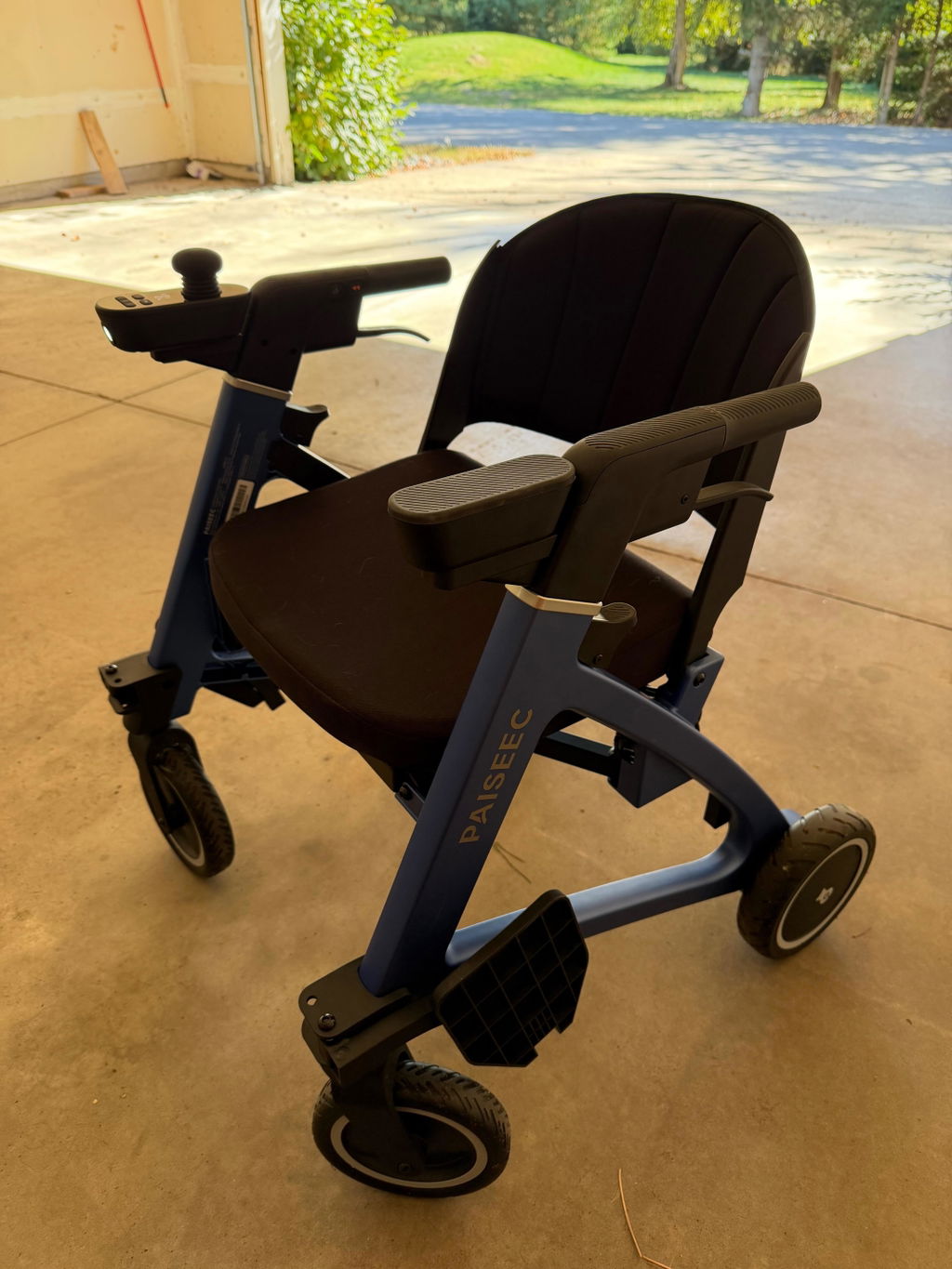
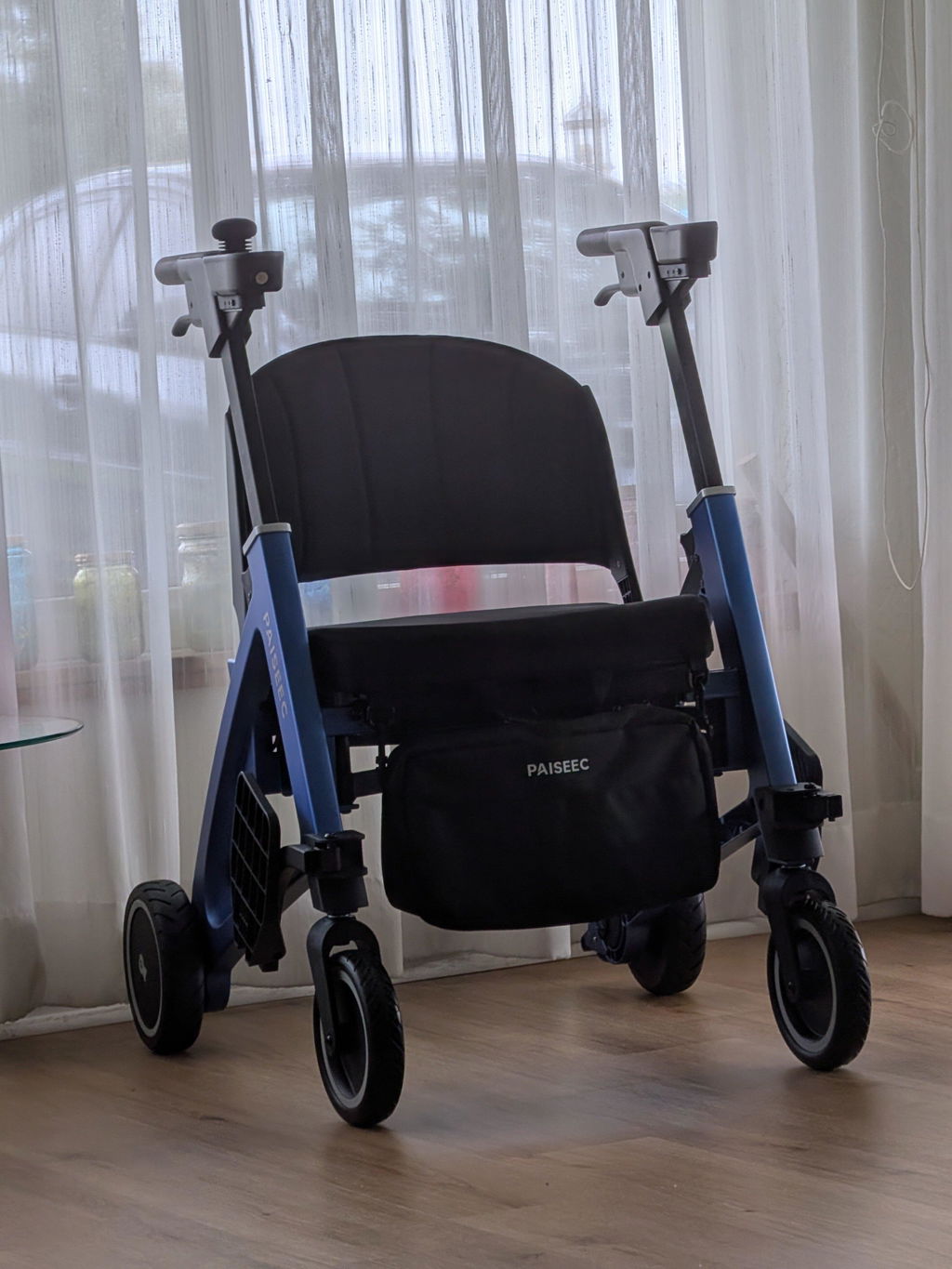
Paiseec offers lightweight, foldable electric mobility solutions designed for users who want practical daily transportation without giving up the confidence needed for regular outdoor use. Before purchasing, practice or demonstrate the complete folding and loading process.
Measure the vehicle cargo area, trunk opening, doorway width, storage area, and any steps or thresholds at home. A chair is only portable if it fits the complete journey from home to destination.
Is a 400W Motor Always the Better Choice?
No. A 400W motor is not always the best choice. Users who primarily travel indoors on flat floors may benefit more from low weight, compact turning, quiet operation, simple storage, and easy vehicle loading than from added outdoor motor reserve.
Higher-power systems can improve climbing confidence and performance on uneven terrain, but they may also involve larger batteries, stronger frames, and more weight. A good mobility decision balances power against the realities of everyday use.
A lower-output chair may be suitable for:
-
Indoor homes, offices, malls, and accessible public buildings.
-
Flat routes with short travel distances.
-
Users who need a lighter chair for frequent car loading.
-
Small apartments with limited storage.
-
Occasional mobility assistance rather than regular outdoor commuting.
A 400W configuration may be more appropriate for people who routinely use curb ramps, longer sidewalks, uneven pavement, moderate inclines, parks, parking areas, and daily outdoor routes.
The goal is not to buy the highest wattage available. The goal is to choose a wheelchair that offers safe, predictable performance on the surfaces you use most often.
How Does the PAI Safety System Support Safer Mobility?
An intelligent safety system can support smoother acceleration, clearer status feedback, controlled braking, and safer daily operation. It should support the rider’s judgment rather than replace careful route planning, routine maintenance, and compliance with the wheelchair’s operating limits.
Paiseec developed the PAI intelligent safety riding system as part of its wider focus on confidence, convenience, and responsive mobility control. The system reflects the principle that a rider should receive practical feedback without being overwhelmed by complicated operation.
Paiseec Mobility was founded in 2021 and has invested $10 million in research and development. Its team includes more than 100 R&D professionals working across five advanced laboratories. This infrastructure supports the company’s focus on battery technology, brushless motor systems, lightweight foldable designs, and intelligent mobility safety.
Every rider and caregiver should know how to:
-
Power the wheelchair on and off correctly.
-
Recognize low-battery and system-warning indicators.
-
Use electromagnetic braking safely.
-
Engage manual mode only when the chair is powered off and secure.
-
Keep bags, clothing, and accessories away from moving wheels.
-
Stop using the chair after impact damage, water exposure, steering problems, unusual noises, or reduced braking response.
Safety comes from the full system: user awareness, sound mechanical condition, responsible driving, and a wheelchair matched to the intended environment.
Paiseec Expert Views
“Motor power is only one part of a safe mobility decision. Over more than 10 years in product development, sales, and management across electronics and mobility, I have learned that users benefit most when the motor, battery, controller, braking system, frame geometry, and support process work together. At Paiseec, our engineering teams focus on practical confidence: enough power for a real route, clear operating guidance, and tested safety features that support daily independence. Choose a wheelchair based on your actual terrain, total load, storage needs, and return-trip energy reserve. Reliable mobility comes from an honest match between the rider and the complete system.”
— Roger, Founder of Paiseec Mobility
Who Should Consider a 400W Power Wheelchair?
A 400W power wheelchair may suit adults and seniors who need stronger outdoor performance while still wanting a compact, foldable, and practical mobility solution. It can be especially helpful for users whose routine includes pavement, ramps, parking areas, slopes, and longer community trips.
This category may be a strong fit for users who need:
-
Better support on curb ramps and moderate inclines.
-
More confidence on uneven sidewalks and outdoor pathways.
-
Stable performance with bags, baskets, or essential equipment.
-
A practical balance between power, portability, and battery range.
-
A chair that supports regular travel beyond the home.
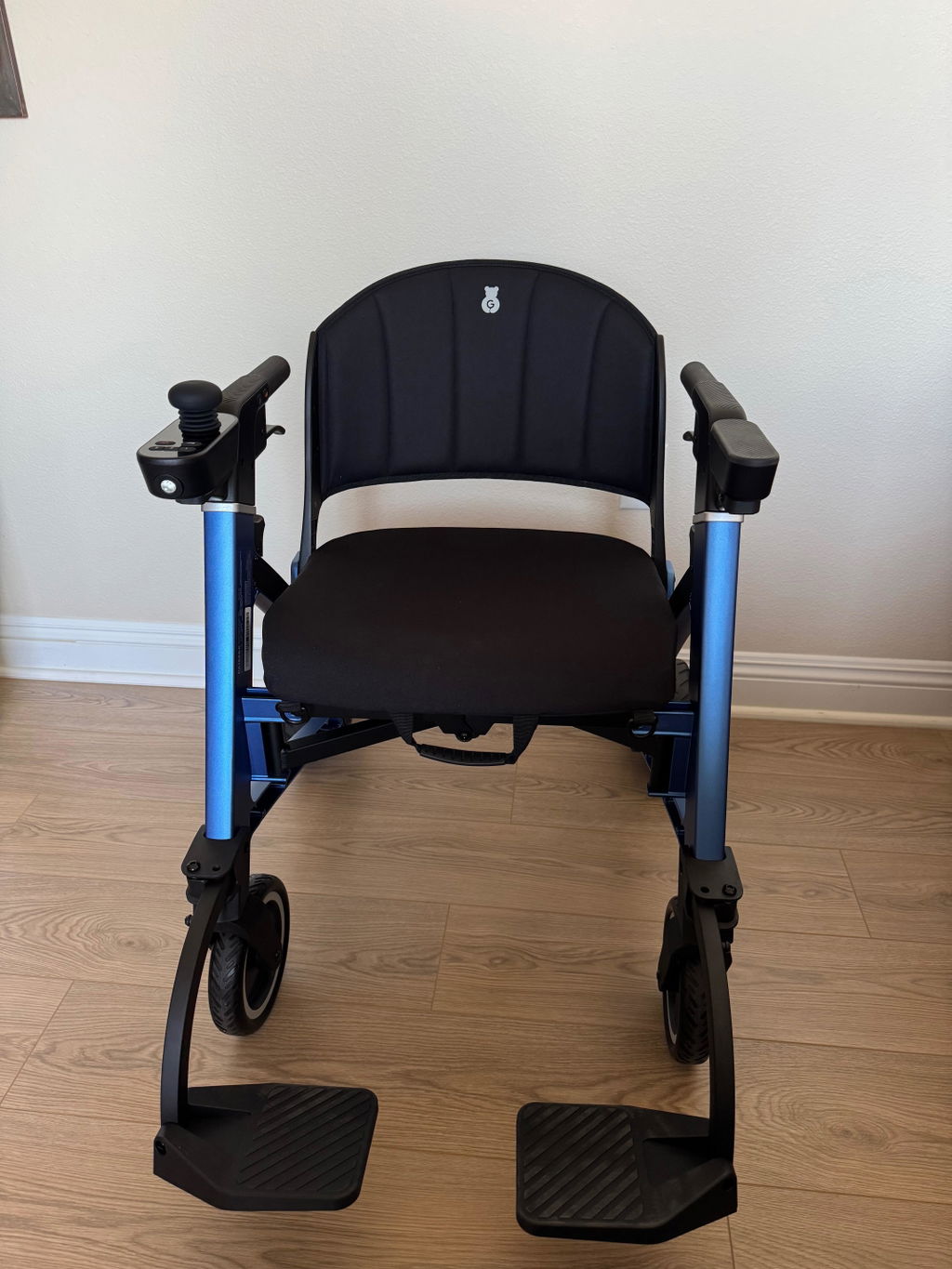
Paiseec’s multi-functional electric wheelchair designs are intended to support greater independence for users who want to maintain an active routine. A thoughtful design should address not only movement, but also folding, storage, charging, rider comfort, service needs, and day-to-day usability.
Users with complex seating needs, pressure-care concerns, postural support requirements, or progressive medical conditions should consult a qualified healthcare professional and mobility specialist before selecting a wheelchair.
What Should You Check Before Buying?
Before buying a power wheelchair, check seating fit, maximum user weight, safe incline rating, transport dimensions, battery specifications, service coverage, braking features, and real-world range expectations. The best purchase supports the complete daily routine instead of solving only one mobility challenge.
Use this practical buying checklist:
-
Measure doorways, hallways, elevators, storage areas, and vehicle openings.
-
Confirm seat width, seat depth, armrest placement, footrest support, and joystick position.
-
Check whether the stated motor rating refers to total, per-motor, continuous, or peak output.
-
Review battery type, capacity, charging time, removal method, and replacement availability.
-
Verify safe incline limits and operating restrictions for wet or uneven conditions.
-
Understand the folding process and chair weight with and without the battery.
-
Ask about warranty coverage, repair support, replacement parts, and customer service.
-
Test the chair on surfaces similar to those used in daily life whenever possible.
-
Leave battery capacity in reserve for return travel and unexpected route changes.
A wheelchair should feel stable, manageable, and comfortable from the first test. Do not compromise on seating support or safety features simply to gain a higher power rating.
What Are the Key Takeaways for Choosing a 400W Wheelchair?
A 400W motor power wheelchair can provide a valuable combination of torque, outdoor confidence, and everyday practicality when matched to the right rider and route. The most important decision is not choosing the biggest number, but choosing the most capable complete system for real conditions.
Start by mapping your typical trips. Include doorways, sidewalks, ramps, parking lots, hills, weather exposure, storage space, vehicle transport, and daily battery needs. Then compare motor setup, battery energy, tires, braking, weight capacity, folding design, and service support.
Choose sufficient power for your normal terrain, maintain a battery reserve, remain within all manufacturer limits, and inspect the wheelchair regularly. With a well-matched design and responsible use, a 400W mobility solution can help support safer, more independent travel every day.
What Are Common Questions About 400W Power Wheelchairs?
What speed can a 400W power wheelchair reach?
Many 400W power wheelchairs operate at walking-speed levels, often around 3.7 to 4 mph. Actual speed depends on controller programming, wheel size, battery voltage, rider weight, terrain, and local operating requirements. More wattage generally improves torque reserve rather than dramatically increasing safe travel speed.
Does a 400W wheelchair work on grass?
A 400W wheelchair may handle short, dry, firm grass better than an indoor-only travel chair. However, wet grass, loose soil, long grass, holes, slopes, and muddy conditions can reduce traction and create safety risks. Always follow the manufacturer’s terrain guidance.
How long does a 400W wheelchair battery last?
Battery range depends on energy capacity, rider weight, speed, terrain, hills, temperature, tire condition, and battery age. Maximum advertised range is usually based on favorable conditions. Plan daily routes conservatively and retain enough charge for the return trip.
Are dual 200W motors the same as one 400W motor?
They can have the same combined output rating, but performance may differ based on gearing, motor type, controller tuning, wheel placement, and traction. Dual-drive systems commonly power each wheel independently, which can support balanced driving and responsive control.
Can a 400W power wheelchair travel by airplane?
Airline eligibility depends mainly on battery chemistry, watt-hour rating, removability, airline rules, and destination requirements. Motor wattage is not the main factor. Contact the airline before travel and prepare the chair’s battery documentation and handling instructions.
Leave a comment
This site is protected by hCaptcha and the hCaptcha Privacy Policy and Terms of Service apply.