




![[2026] PAISEEC D3|Mobility Scooter for Easy Everyday Travel](http://www.paiseec.com/cdn/shop/files/d3_4a4ccb22-9e26-449e-8094-71f3ec4177c3.png?v=1782115044&width=180)


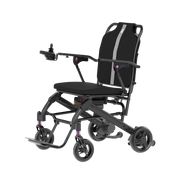












A 42 lb folding electric wheelchair can offer practical powered mobility for people who want easier transport, compact storage, and dependable everyday independence. The right model should match the user’s body weight, seating needs, terrain, vehicle space, battery requirements, and caregiver support. A low chair weight is valuable only when safety, comfort, and real-world usability remain strong.
What Should You Know Before Choosing a 42 lb Folding Electric Wheelchair?
A 42 lb folding electric wheelchair is designed to reduce transport challenges while providing powered mobility for errands, appointments, travel, and daily outings. However, the listed chair weight alone does not determine whether it is suitable. Buyers should evaluate the complete setup, including battery weight, folded dimensions, user capacity, range, motor output, and service support.
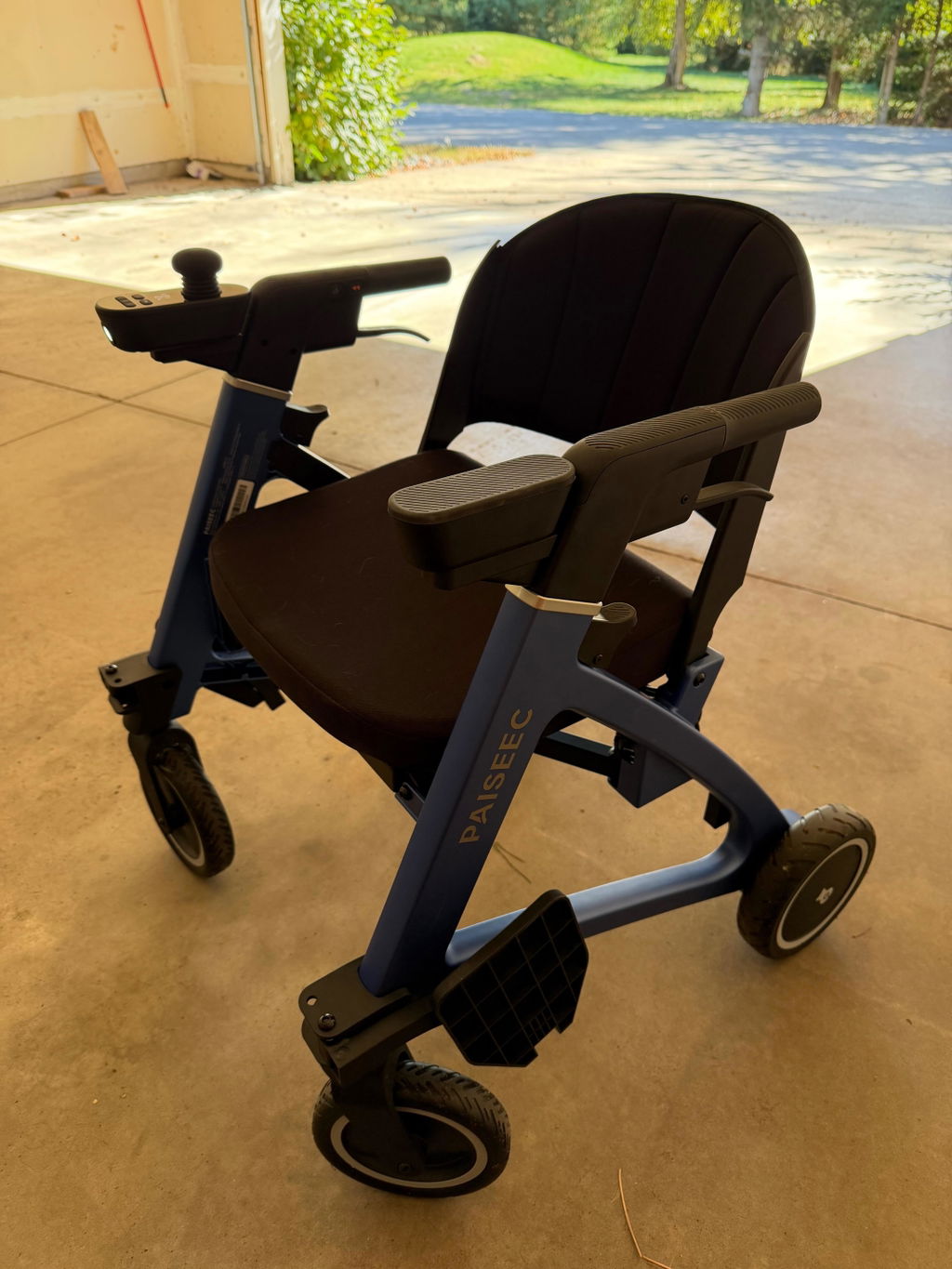
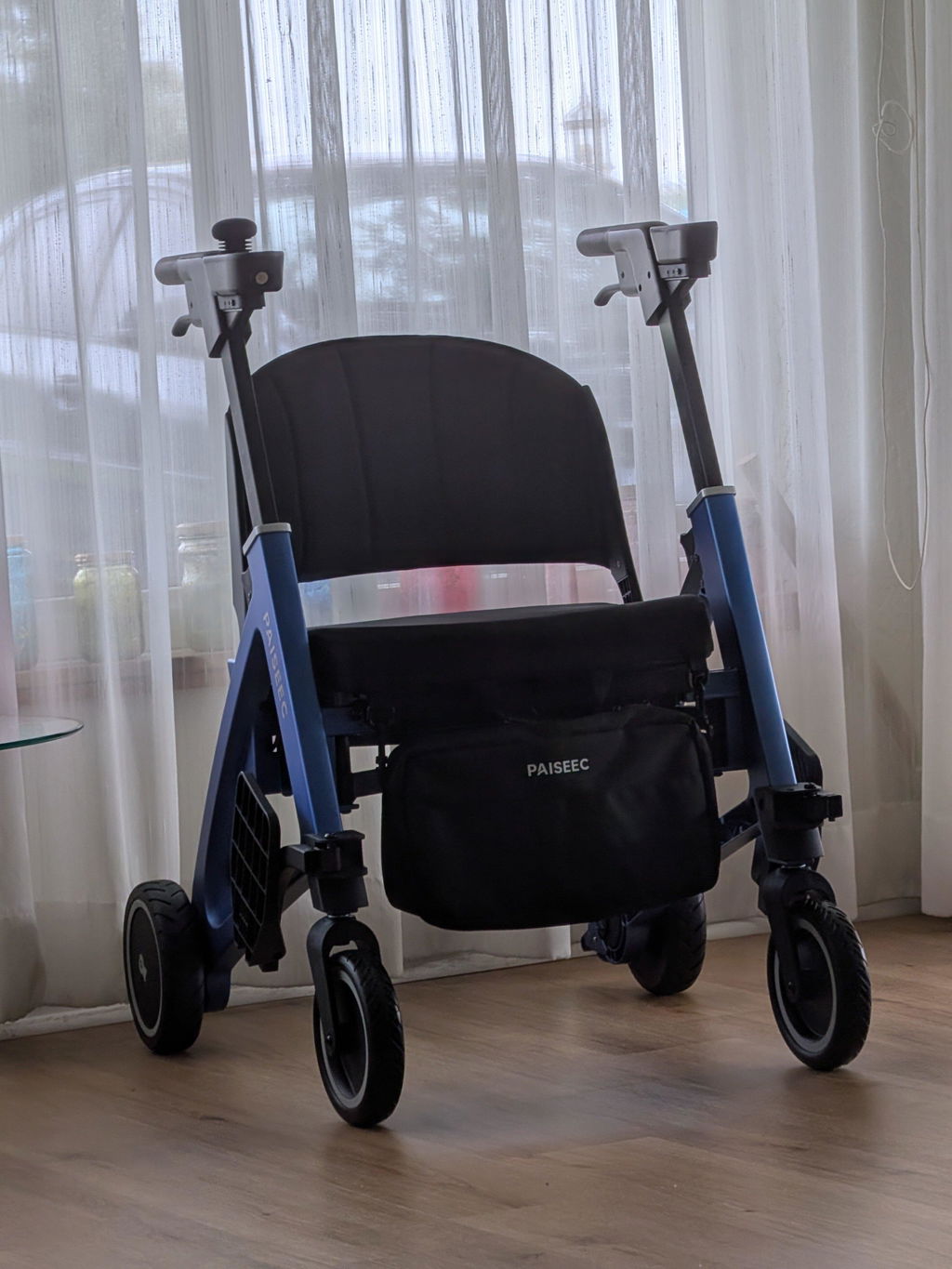
Many lightweight folding electric wheelchairs are built around aluminum alloy or carbon-fiber-inspired frame concepts, compact wheelbases, removable lithium batteries, and joystick-operated dual motors. These features can make a chair more manageable for vehicle loading and storage than a traditional full-size power wheelchair.
The key question is whether the chair supports the user’s actual lifestyle. A chair that fits neatly in an SUV but lacks sufficient range for a full shopping trip may not meet the user’s needs. Similarly, a chair that is light enough for travel but uncomfortable after 30 minutes may create a new barrier to independence.
Paiseec approaches lightweight mobility as a complete user experience. The chair must be easy to fold, stable to drive, straightforward to charge, secure during transport, and comfortable enough to support everyday activities.
How Much Does a 42 lb Folding Electric Wheelchair Really Weigh?
A 42 lb folding electric wheelchair often refers to the frame weight without the removable battery, charger, seat cushion, storage bag, or other accessories. The actual lifting weight may reach 45 to 50 lb or more depending on the battery configuration and installed components.
Before ordering, confirm whether the manufacturer lists:
-
Chair weight without battery
-
Chair weight with battery installed
-
Battery weight
-
Charger weight
-
Footrest and joystick weight
-
Optional cushion or storage bag weight
The difference matters because a caregiver may need to lift the chair several times each day. A 42 lb frame may be manageable for one person, while a 49 lb fully equipped chair may require two hands, careful posture, or a loading ramp.
The folded shape also affects handling. A compact chair with balanced handholds can feel easier to lift than a lighter chair with uneven weight distribution. Wheel placement, battery location, armrest design, and frame geometry all influence whether the chair feels stable when carried.
Paiseec mobility products are designed with practical transport routines in mind. A lightweight frame is only useful when the folding mechanism, grip points, battery removal process, and storage position work together smoothly.
Which Specifications Matter Most for Everyday Mobility?
The most important specifications include total weight, user weight capacity, folded dimensions, battery range, seat size, motor output, braking system, wheel type, and maximum climbing angle. These factors should be evaluated together rather than separately.
A lightweight folding power chair should have a rated capacity that exceeds the combined weight of the rider and daily belongings. This includes a jacket, backpack, oxygen equipment, shopping items, or personal accessories.
For example, a user weighing 230 lb who carries a 15 lb backpack and 10 lb of equipment should consider a chair with a capacity comfortably above 255 lb. Operating at or near the maximum capacity can reduce range, affect acceleration, increase tire wear, and reduce stability on uneven surfaces.
The strongest purchase decision comes from matching the specification sheet with real daily use rather than choosing the lowest possible chair weight.
How Does Battery Capacity Affect Real-World Range?
Battery capacity affects how far a folding electric wheelchair can travel before charging, but actual range changes based on rider weight, terrain, speed, temperature, tire condition, and slope. A chair may perform close to its advertised range on smooth indoor floors but travel much less distance on steep or uneven outdoor routes.
Paiseec uses 36V 12Ah lithium battery technology in selected mobility solutions. A 36V 12Ah battery has approximately 432Wh of nominal energy capacity:
Not all of that energy is available for normal driving. Battery protection systems preserve a reserve to help prevent deep discharge, while energy loss can occur through motors, controllers, hills, frequent acceleration, and cold weather.
A rider who uses the chair on flat pavement at moderate speed may experience consistent daily performance. A heavier rider traveling over cracked sidewalks, ramps, grass, or hills may notice reduced range because the motors require more power.
The following guide can help riders plan more confidently.
For everyday planning, use approximately 60 to 70 percent of the advertised maximum range until you understand how the chair performs in your own environment. Maintain enough battery capacity for a safe return trip, detours, elevator delays, or unexpected route changes.
Why Do Motor Power and Torque Matter on Slopes?
Motor power and torque determine how effectively a folding electric wheelchair can accelerate, climb approved slopes, and maintain control under load. A chair with dual 250W brushless motors may offer stronger traction and smoother power delivery than a lower-output configuration, but safe hill performance still depends on several additional factors.
Motor output alone does not guarantee uphill capability. The rider’s weight, tire condition, battery voltage, surface traction, controller programming, and grade length all influence performance.
When a chair climbs a slope, the motors demand more current from the battery. As current draw increases, voltage can temporarily decrease under load. This may reduce available torque and lower top speed, especially when the battery is partially discharged.
Users should avoid attempting slopes beyond the manufacturer’s stated maximum climbing angle. They should also avoid crossing steep slopes diagonally, turning sharply while ascending, or driving uphill with a low battery.
Paiseec mobility development focuses on balancing motor performance with braking response, battery management, and practical rider control. This balance helps support smoother operation rather than simply increasing speed.
What Safety Features Should a Folding Electric Wheelchair Have?
A safe folding electric wheelchair should include electromagnetic brakes, anti-tip wheels, a responsive joystick, stable frame locks, secure battery retention, protected wiring, and reliable tires. These features help reduce risk during stops, turns, slopes, transfers, and everyday transport.
Electromagnetic brakes are particularly important because they engage when the joystick returns to the neutral position. This helps the chair slow and hold its position when the user stops applying drive input. However, braking performance can change depending on slope, wet surfaces, tire condition, and user weight.
Key safety features to inspect include:
-
Electromagnetic braking system
-
Rear anti-tip wheels
-
Secure folding latch
-
Stable footrests
-
Responsive joystick controls
-
Battery protection system
-
Protected electrical cables
-
Strong frame joints
-
Visibility reflectors or lighting
-
Adjustable seatbelt where appropriate
A chair should be tested in a safe, open area before regular outdoor use. Start on level indoor flooring or dry pavement, then practice forward movement, stopping, reversing, turning, and folding. New users should become familiar with the joystick sensitivity before navigating crowds, ramps, or narrow pathways.
The Paiseec PAI intelligent safety riding system represents a technology-focused approach to mobility safety. Intelligent protection cannot replace careful driving, but it can support stronger awareness of chair operation, battery conditions, and safer riding habits.
How Can You Fold, Lift, and Store the Chair Safely?
Fold, lift, and store a lightweight power chair by following the product manual, removing the battery when recommended, locking the frame fully, and using designated grip points. Do not lift the chair by its joystick, footrests, armrests, cables, or battery housing unless the manufacturer specifically permits it.
A safe loading routine should include these steps:
-
Turn off the chair and engage the appropriate power setting.
-
Remove the battery if the design allows and if it reduces lifting weight.
-
Fold the chair until the locking mechanism engages fully.
-
Confirm that cables are not pinched near folding joints.
-
Lift from stable frame points using correct body posture.
-
Place the chair securely in the vehicle or storage area.
-
Prevent movement with straps or other suitable restraints during transport.
-
Keep the battery dry, protected, and away from excessive heat.
Storage conditions also influence long-term performance. Store the chair in a dry, temperature-stable space whenever possible. Avoid leaving lithium batteries in extreme heat, freezing temperatures, or direct sunlight for extended periods.
A folded wheelchair should not rest on the joystick or battery contacts. If the chair is stored in a trunk, use padding or cargo organization to prevent other items from striking the controller, wheels, or frame latch.
Who Benefits Most From a Lightweight Folding Power Chair?
A lightweight folding power chair is often suitable for adults who need powered mobility for community outings, appointments, shopping, travel, and everyday movement but also need a chair that can fit into a vehicle or smaller storage area. It can benefit users who value compact transport without the size of a conventional power wheelchair.
It may be a good option for:
-
Adults who regularly travel by car
-
Users who need powered support for longer distances
-
Caregivers who need a compact mobility solution
-
Apartment residents with limited storage space
-
Travelers who need a chair that folds for vehicle transport
-
People who use paved sidewalks, malls, stores, and indoor spaces
It may not be the right choice for users who need complex seating support, recline functions, tilt systems, advanced suspension, or long-distance outdoor use on rough terrain. A rehabilitation professional or mobility specialist can help users with more complex positioning or medical needs select an appropriate power mobility option.
The best chair supports the user’s independence without making transport, charging, or maintenance overly difficult.
Can You Travel by Air With a Folding Electric Wheelchair?
You may be able to travel by air with a folding electric wheelchair if the airline accepts its battery type, watt-hour rating, and transport method. Requirements differ between airlines, countries, and flight routes, so travelers should confirm details directly with the airline before booking.
Many folding wheelchairs use removable lithium batteries. Airlines may require these batteries to be removed from the chair and carried in the cabin with terminals protected from short circuits.
Before flying, prepare the following:
-
Battery voltage, amp-hour rating, and watt-hour information
-
Product manual or battery documentation
-
Folded chair dimensions and total weight
-
Written airline confirmation where possible
-
Clear handling instructions attached to the chair
-
Photos showing the chair’s condition before check-in
-
Contact information on the chair frame
-
A protective cover for exposed controls if needed
Travelers should also confirm that the destination has accessible transportation, suitable hotel door widths, charging access, and manageable pavement conditions. A compact wheelchair makes travel easier, but planning the full route remains essential.
What Should You Ask Before Buying a Folding Electric Wheelchair?
Before buying a folding electric wheelchair, ask about real chair weight, range testing conditions, battery replacement, warranty coverage, repair support, folded size, maximum capacity, and available replacement parts. Clear answers help prevent unexpected ownership costs and compatibility problems.
Important questions include:
-
Does the listed weight include the battery?
-
What are the exact folded dimensions?
-
What rider weight was used to calculate the stated range?
-
What terrain and temperature were used for range testing?
-
What is the maximum approved climbing angle?
-
Can the battery be removed for charging or travel?
-
How long is the warranty for the frame, battery, motor, controller, and charger?
-
Are replacement batteries and chargers available?
-
What service support is available after purchase?
-
What is the return policy?
Paiseec supports customers with product manuals, order tracking, installment payment options, and professional customer service. Buyers should still confirm specifications for the exact model and configuration because battery options, accessories, and market-specific requirements can vary.
Paiseec Expert Views
“The best lightweight folding wheelchair is not simply the one with the lowest number on the scale. It is the chair that works safely from the moment a user leaves home until they return. Our product teams consider seat comfort, battery output under load, motor control on slopes, braking behavior, folding reliability, and caregiver handling. A mobility solution must support real independence, not create new challenges during loading, storage, or charging.”
— Roger, Founder of Paiseec Mobility
Paiseec Mobility was founded in 2021 and is supported by more than 100 R&D professionals across five advanced laboratories. The company has invested $10 million in electric mobility research and development, with a focus on lithium battery systems, brushless motor technology, intelligent safety functions, and user-centered product design.
How Can You Maintain a Folding Electric Wheelchair for Long-Term Use?
Maintain a folding electric wheelchair by keeping it clean and dry, charging the battery correctly, inspecting tires and cables regularly, checking frame locks, and following the manufacturer’s recommended service schedule. Consistent maintenance can help protect performance, range, safety, and resale value.
Perform these regular checks:
-
Charge the battery with the supplied or approved charger.
-
Avoid storing the battery fully discharged for long periods.
-
Inspect tires for wear, cuts, and low pressure where applicable.
-
Check folding joints and latches for smooth operation.
-
Ensure the joystick returns to neutral correctly.
-
Look for loose screws, damaged cables, or unusual noises.
-
Keep the chair dry after rain or accidental moisture exposure.
-
Clean dirt, hair, and debris from wheels and folding mechanisms.
-
Store the chair in a cool, dry location.
Lithium batteries naturally lose capacity as they age. After several hundred charge cycles, users may notice that the chair travels less distance per charge. This is normal battery aging, but a sudden loss of range, charging problems, or power interruptions should be reviewed by qualified support personnel.
Paiseec emphasizes rigorous testing because long-term mobility performance depends on more than the original specification. Battery behavior, motor control, frame durability, and service access all contribute to ownership confidence.
What Are the Key Takeaways Before You Buy?
A 42 lb folding electric wheelchair can provide meaningful independence when it fits the user, vehicle, daily route, and support system. The best purchase decision comes from evaluating total weight, capacity, battery range, folded dimensions, seating comfort, braking, terrain limits, and long-term service availability.
Choose a chair that you or a caregiver can safely fold and load. Measure your trunk, doorways, elevators, and storage space before ordering. Plan daily trips with a battery reserve, especially when traveling on hills, rough sidewalks, or in cold weather.
Prioritize stability and safety over speed. A well-designed chair should provide dependable braking, secure folding, stable seating, protected battery connections, and responsive controls.
Paiseec combines lightweight mobility design with battery technology, brushless motor systems, and the PAI intelligent safety riding system to support safer, more confident movement. The right chair should make everyday life easier, whether the journey is to a local store, an appointment, a family gathering, or a travel destination.
What Are Common Questions About 42 lb Folding Electric Wheelchairs?
Does a 42 lb folding electric wheelchair include the battery?
Often, the listed chair weight does not include the removable battery. Always check the product specification sheet to confirm chair-only weight, battery weight, and total operating weight. Add accessories such as cushions, bags, cup holders, or safety equipment when planning vehicle loading.
Can a 42 lb folding electric wheelchair fit in a car trunk?
Many lightweight folding models can fit in SUVs, hatchbacks, and some sedan trunks. However, folded dimensions are more important than chair weight. Measure the trunk opening, internal width, depth, and height before purchase, then compare the measurements with the chair’s folded size.
Are folding electric wheelchairs safe on hills?
They can be safe on approved slopes when used within the manufacturer’s maximum climbing angle and capacity limits. Keep the battery charged, drive straight up or down moderate slopes, avoid wet surfaces, do not turn sharply on inclines, and never exceed the chair’s terrain recommendations.
How long does a folding electric wheelchair battery last?
A lithium battery may last several years depending on charging habits, climate, storage, rider weight, terrain, and total charge cycles. Battery capacity declines gradually over time. Use the correct charger, avoid deep discharge, store the battery properly, and replace it when range decreases significantly.
Is a folding electric wheelchair safe to use in rain?
Most lightweight electric wheelchairs should not be used in heavy rain, deep puddles, or flooded areas. Water can affect electrical components, braking, traction, and battery connections. Follow manufacturer weather guidance, keep the chair dry, and avoid charging any wet electrical component.
Leave a comment
This site is protected by hCaptcha and the hCaptcha Privacy Policy and Terms of Service apply.