




![[2026] PAISEEC D3|Mobility Scooter for Easy Everyday Travel](http://www.paiseec.com/cdn/shop/files/d3_4a4ccb22-9e26-449e-8094-71f3ec4177c3.png?v=1782115044&width=180)

















The Paiseec Q3 is a lightweight folding electric wheelchair designed for indoor mobility, paved outdoor routes, vehicle transport, and travel-oriented users. Its appeal comes from its compact aluminum frame, removable lithium battery, brushless motor, folding design, and intelligent safety features. It is most suitable for people who value portability and everyday independence over heavy-duty off-road performance.
What Is the Paiseec Q3 Electric Wheelchair?
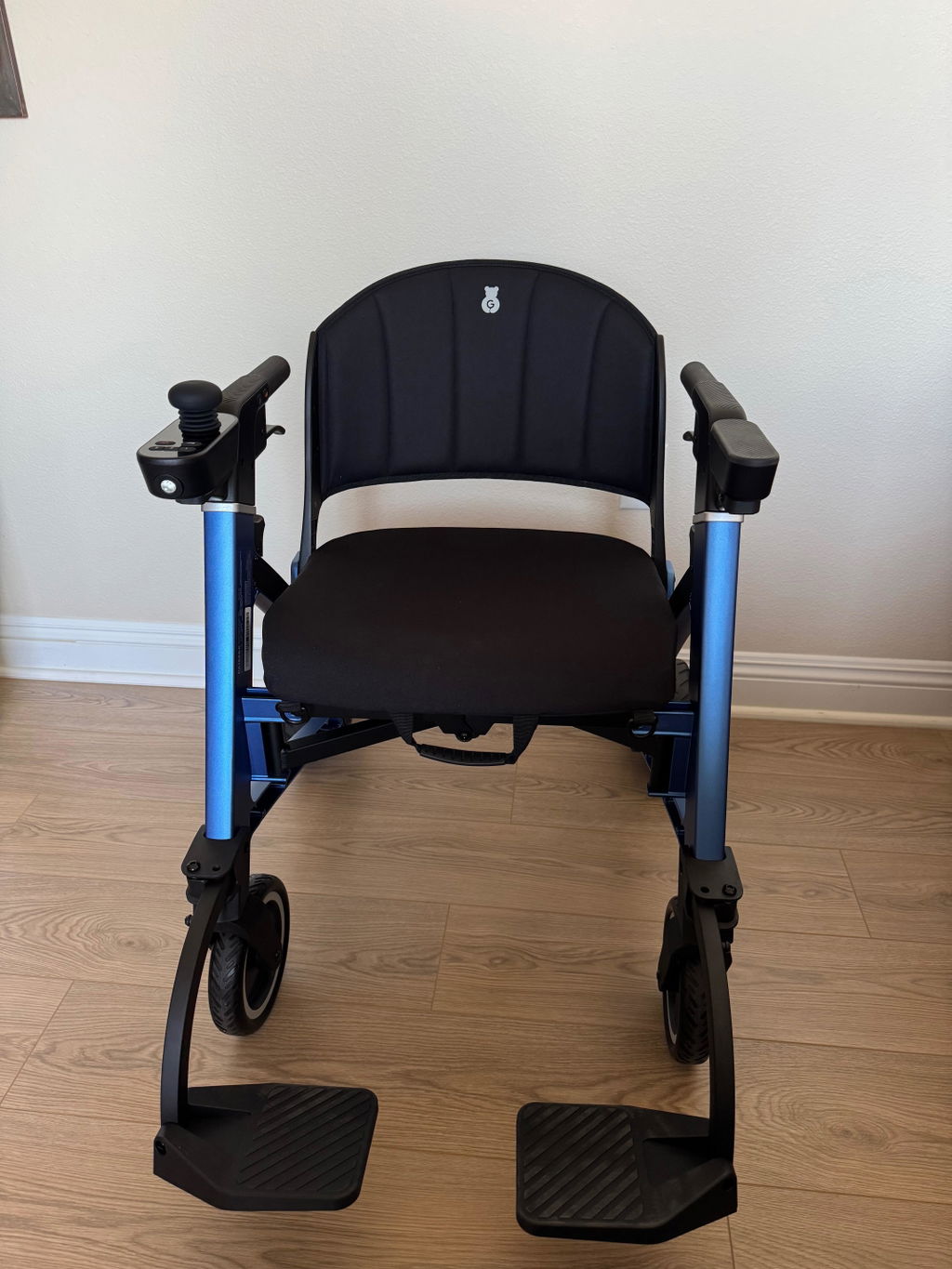
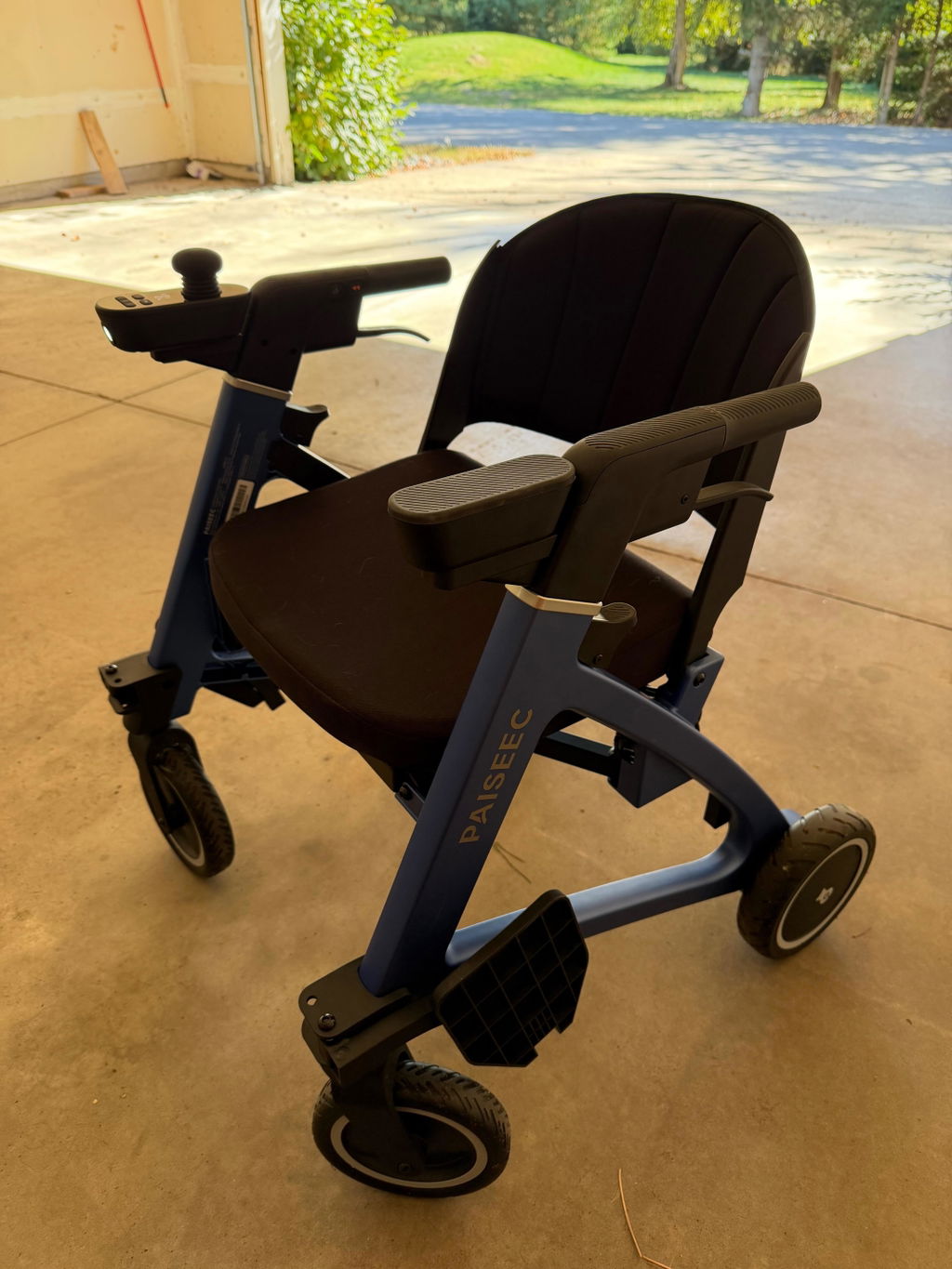
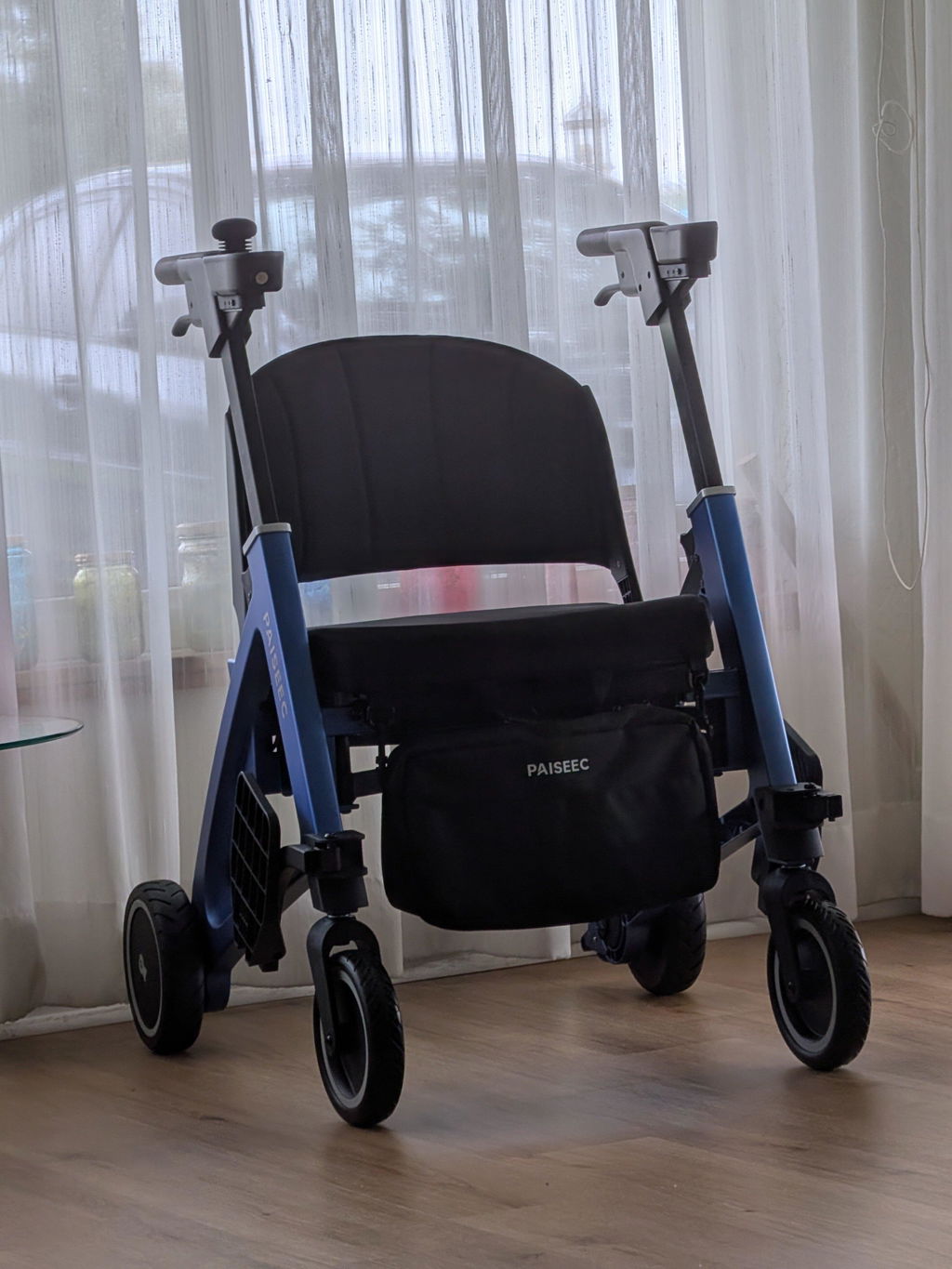
The Paiseec Q3 is a compact electric wheelchair created for adults and seniors who need powered mobility without the bulk of a traditional full-size power chair. It combines a foldable frame, lightweight construction, joystick control, and a removable battery to make everyday trips more manageable.
Paiseec positions the Q3 as a practical mobility solution for users who want to move independently through homes, shopping centers, medical facilities, airports, sidewalks, and other accessible environments. Its design focuses on reducing common ownership obstacles: difficult transportation, large storage requirements, complicated controls, and limited maneuverability in tight spaces.
The wheelchair uses an aluminum-alloy frame to balance structural strength with easier handling. Its listed frame weight is approximately 32 pounds, although buyers should confirm whether the battery is included in that figure when comparing retailers or production versions.
The Q3 is designed around several essential mobility needs:
-
Compact storage in apartments, vehicles, and accessible homes
-
Easier loading into a trunk or SUV
-
Controlled indoor turning in hallways and narrow rooms
-
Powered travel for people with reduced walking endurance
-
Simple joystick operation for daily use
-
Removable battery convenience for charging and travel planning
Unlike a large rehabilitation power chair, the Paiseec Q3 emphasizes portability. That makes it especially appealing for people who need mobility assistance during errands, family outings, medical appointments, or travel but do not need a large chair with extensive seating adjustments.
How Portable Is the Paiseec Q3?
The Paiseec Q3 is highly portable because it folds into a compact form, uses a removable battery, and has a lightweight aluminum structure. However, portability depends on the user’s vehicle, physical lifting ability, storage space, and whether a caregiver is available to load and unload the chair safely.
A lightweight wheelchair should be evaluated by more than its product-page weight. The real question is whether the chair can move smoothly through a complete travel routine: from the home to the car, from the car to the destination, and back again.
The Q3’s folding design is useful for drivers, family members, and caregivers who need to store the wheelchair in a trunk or cargo area. Removing the battery before lifting can reduce the total load and make the chair easier to manage. Still, a 32-pound frame can be difficult to lift for someone with back pain, limited grip strength, or a high vehicle bumper.
Before purchasing, measure the narrowest points in your daily environment:
-
Doorways, hallway corners, and elevator entrances
-
Vehicle trunk width and cargo depth
-
Lift-over height from the ground to the trunk
-
Closet, garage, or apartment storage space
-
Accessible seating space in restaurants, offices, and public venues
A compact chair can save substantial effort compared with a traditional heavy power wheelchair. Yet buyers should not assume that a folding frame will fit every compact sedan or hatchback. It is always better to compare the folded dimensions with the actual vehicle cargo opening before ordering.
What Performance Can Users Expect From the Q3?
The Paiseec Q3 is designed for controlled daily mobility, offering a brushless motor, joystick steering, a pedestrian-friendly top speed, and responsive handling in accessible spaces. It is best suited to smooth indoor flooring, paved sidewalks, ramps, parking areas, and maintained paths rather than difficult off-road environments.
Product descriptions for the Q3 commonly highlight a 500W brushless motor, which is designed to provide quiet and efficient propulsion. Brushless motors generally offer fewer moving wear components than older brushed motor systems, helping reduce noise and supporting smoother acceleration.
The chair’s performance should be understood in the context of its lightweight design. A compact power wheelchair is optimized for convenience, maneuverability, and controlled travel. It is not built to behave like a large outdoor mobility scooter with oversized tires, suspension, and long-range battery capacity.
For best control, new users should begin at a lower speed setting in an open, level area. Practice accelerating, reversing, stopping, and turning before using the wheelchair near curbs, crowds, driveways, or uneven pavement.
How Far Can the Paiseec Q3 Travel on One Charge?
The Paiseec Q3 can support short-to-moderate daily trips on one charge, but actual distance depends on battery configuration, rider weight, terrain, weather, speed, slopes, and stop-and-go use. Buyers should treat published range figures as ideal-condition estimates and maintain a reserve for safe return travel.
Paiseec product materials may show different battery and range configurations across versions or listings. Some descriptions reference a 24V 12Ah battery and shorter daily travel expectations, while others describe a 36V 12Ah battery with a longer estimated range. Buyers should confirm the battery voltage, capacity, and expected range for the exact Q3 version being purchased.
Real-world range changes for predictable reasons. A chair uses more energy when it accelerates repeatedly, climbs ramps, carries a heavier rider, travels in cold conditions, or moves over rough pavement. Flat, smooth indoor routes usually require less energy than hilly neighborhoods or heavily cracked sidewalks.
A practical approach is to plan early outings conservatively. Instead of attempting the longest possible route, use several familiar trips to understand the wheelchair’s actual energy use. Track distance, terrain, temperature, rider load, and battery level after each trip.
Battery care can improve long-term reliability:
-
Recharge after meaningful use rather than repeatedly draining the battery fully
-
Use the compatible charger supplied or approved by the manufacturer
-
Keep charging ports dry, clean, and free of debris
-
Store the battery away from extreme heat and freezing conditions
-
Avoid long storage periods with a fully depleted battery
-
Investigate sudden range loss or charging irregularities promptly
A spare approved battery may be valuable for users who regularly attend long appointments, travel through large venues, or need additional confidence during full-day outings.
Does the Paiseec Q3 Handle Hills, Grass, and Uneven Ground?
The Paiseec Q3 can handle smooth sidewalks, accessible ramps, maintained pavement, and gentle slopes when used carefully. It should not be treated as an all-terrain wheelchair because small tires, compact geometry, low clearance, and lightweight construction can limit traction and stability on loose or uneven surfaces.
The difference between a safe route and a risky route often comes down to surface condition. A paved walkway may look level but contain expansion gaps, raised edges, loose gravel, wet leaves, or sloped driveway entrances. These obstacles can affect steering and stability more significantly in a lightweight chair with compact wheels.
The Q3 is generally most appropriate for:
-
Smooth sidewalks and paved neighborhood routes
-
Accessible shopping centers and medical campuses
-
Indoor floors, elevators, and wide hallways
-
Firm, dry, level outdoor paths
-
Approved curb ramps and accessible entrances
Users should avoid treating grass, dirt, sand, mud, or deep gravel as routine travel surfaces. Even when a wheelchair can move across a short section of firm grass, hidden holes, roots, moisture, and soft soil can quickly create a stability problem.
Approach sidewalk cracks and driveway transitions slowly and as directly as possible. Do not cross a sharp obstacle at a steep angle, and avoid trying to climb a curb without an approved ramp. On downhill routes, reduce speed before beginning the descent rather than waiting until the chair is already moving quickly.
What Safety Features Matter Most on the Q3?
The Paiseec Q3 combines electronic controls, electromagnetic braking, stable seating, and the PAI intelligent safety riding system to support controlled mobility. However, safe operation still depends on user training, proper maintenance, sensible route choices, and careful attention to speed, turns, slopes, and battery condition.
Paiseec promotes its PAI intelligent safety riding system as a key part of its mobility technology. The system is intended to support safer operation through functions related to controlled riding behavior, including speed management and braking response. Like any safety technology, it should complement careful driving rather than encourage riskier use.
The most important safety habit is learning how the chair reacts before relying on it in public. New users should practice in a clear area without traffic, crowds, or uneven terrain. The goal is to understand joystick sensitivity, turning behavior, stopping distance, and reverse control.
Use this pre-ride routine before longer outings:
-
Confirm that the battery is securely installed and sufficiently charged
-
Check that the joystick returns to its neutral position smoothly
-
Inspect tires and wheels for damage, debris, or unusual wear
-
Confirm that footrests, armrests, and accessories are secure
-
Keep bags and personal items low and centered
-
Avoid carrying heavy items behind the backrest
-
Test movement and braking in a clear space after storage or transport
Wet pavement, sharp turns, steep ramps, and crowded areas require lower speed and more attention. Never use the chair while impaired, distracted, or uncertain about the route ahead.
Which Users Are the Best Match for the Paiseec Q3?
The Paiseec Q3 is best for adults and seniors who need a portable power wheelchair for accessible daily travel, short errands, family activities, and vehicle transport. It may not be the best fit for users who require highly customized seating, severe terrain capability, heavy weight capacity, or long-distance outdoor performance.
The ideal Q3 owner values mobility freedom but also understands the importance of matching equipment to personal needs. A lightweight folding chair can be highly useful for someone who can safely transfer, use a joystick, and travel mainly through accessible buildings and paved areas.
The wheelchair may suit people who experience fatigue, limited walking tolerance, arthritis, balance concerns, neurological conditions, recovery-related mobility limits, or age-related endurance changes. It can also be useful for caregivers who need a more manageable alternative to a large, heavy power chair.
The Q3 may be less appropriate for people who need:
-
Advanced pressure relief or specialized seating support
-
A chair for unpaved property or frequent rural terrain
-
High daily mileage without charging opportunities
-
Heavy-duty suspension for rough streets
-
Large seat dimensions or bariatric weight support
-
Independent loading when lifting is physically unsafe
A mobility professional, occupational therapist, or rehabilitation specialist can help evaluate posture, transfer safety, pressure management, hand control, and long-term comfort before purchase.
What Should Buyers Check Before Ordering?
Buyers should verify the exact battery specification, wheelchair weight with and without the battery, folded dimensions, warranty, return policy, repair options, and replacement-part availability before ordering. These details determine whether the Q3 will remain practical after delivery and during long-term ownership.
A smart purchase decision goes beyond price and appearance. Mobility equipment is a long-term support tool, so service and compatibility matter as much as design.
Ask the seller or Paiseec customer service these questions before placing an order:
-
What is the exact chair weight with the battery installed?
-
What are the current folded dimensions?
-
Which battery configuration is included with this version?
-
What range is realistic for a rider of my weight and terrain?
-
Which parts can be replaced individually?
-
How does warranty support work in my location?
-
Who pays for return shipping if the chair does not fit my needs?
-
Is airline documentation available for the included battery?
-
Can the joystick, charger, tires, battery, and control components be purchased separately?
-
What maintenance is recommended during the first year?
Buyers should also review the user manual before delivery. The manual provides important instructions about charging, slope limits, waterproofing, storage, folding, transportation, and maintenance. A product that is easy to buy should also be easy to service, understand, and use responsibly.
What Do Paiseec Expert Views Reveal?
Paiseec’s approach emphasizes lightweight mobility, battery innovation, intelligent safety technology, and customer-centered product development. The company reports more than 100 R&D professionals, five advanced laboratories, and a $10 million investment in research and development for electric mobility solutions.
Paiseec Expert Views
“A reliable mobility product should solve the real barriers users face every day: transportation, storage, confidence on accessible routes, and dependable support after purchase. Roger’s experience in product development, sales, and mobility management reflects a practical principle: independence is built through thoughtful engineering, clear safety guidance, and responsive service. A lightweight wheelchair should be judged not only by its specifications, but by how confidently it supports everyday life.”
Paiseec Mobility was founded in 2021 with a focus on innovative travel solutions, including lightweight foldable scooters, electric wheelchairs, and mobility accessories. Its product strategy combines compact design with technical features such as lithium battery systems, brushless motors, and the PAI safety platform.
For buyers, the most meaningful value is not simply a list of technical specifications. It is whether Paiseec provides reliable product documentation, responsible performance guidance, accessible customer support, and replacement pathways that help users remain mobile over time.
Is the Paiseec Q3 Worth Buying for Daily Mobility?
The Paiseec Q3 can be a worthwhile choice for users who need a compact, folding electric wheelchair for indoor use, paved outdoor routes, vehicle transport, and travel-friendly mobility. It is most valuable when buyers verify fit, lifting requirements, battery configuration, service support, and terrain suitability before ordering.
The Q3’s strongest advantages are its lightweight concept, folding structure, removable battery, brushless motor, compact handling, and Paiseec safety-focused design. These features can make everyday mobility more practical for people who find walking long distances difficult or who need powered support outside the home.
The key takeaway is simple: choose the Q3 for predictable, accessible environments rather than extreme terrain. Measure your home and vehicle, confirm your preferred battery setup, assess your local sidewalks and ramps, and make sure the chair’s seat dimensions and controls suit your body and mobility needs.
When used within its intended environment, the Paiseec Q3 can offer a meaningful balance of portability, independence, and everyday convenience.
What Are Common Paiseec Q3 Questions?
Can the Paiseec Q3 fit in a car trunk?
The Q3 can fit in many trunks and SUV cargo areas because it folds into a more compact shape. However, buyers should measure the vehicle opening, cargo depth, and lift height before ordering. Removing the battery may make loading easier.
How long does the Q3 battery take to charge?
Charging time depends on the battery version, remaining power level, and charger specifications. Many lightweight electric wheelchair batteries require several hours for a full charge. Always use the approved charger and charge in a dry, well-ventilated space.
Does the Q3 work on grass?
The Q3 may handle short distances on firm, dry, level grass, but it is not intended for regular off-road use. Wet grass, soft ground, gravel, sand, and hidden obstacles can reduce traction and increase the risk of getting stuck.
Can the Paiseec Q3 be used on airplanes?
The removable battery may support air travel, but every airline has its own rules for lithium batteries and powered mobility devices. Contact the airline before booking, confirm its battery requirements, and carry any required product documentation.
Who should consider a different wheelchair type?
Users who need advanced seating support, high weight capacity, rough-terrain capability, long-distance battery performance, or independent heavy lifting may benefit from a larger or more specialized mobility chair.
Leave a comment
This site is protected by hCaptcha and the hCaptcha Privacy Policy and Terms of Service apply.