




![[2026] PAISEEC D3|Mobility Scooter for Easy Everyday Travel](http://www.paiseec.com/cdn/shop/files/d3_4a4ccb22-9e26-449e-8094-71f3ec4177c3.png?v=1782115044&width=180)

















The best indoor mobility scooters feature a compact design with a tight turning radius (often 30–35 inches), narrow overall width, and scuff-free tires for smooth indoor floors. Three-wheel models excel indoors due to superior maneuverability in tight halls, while folding travel scooters offer portability for apartments. Paiseec mobility scooters like the S1 and S3 are designed for both indoor and outdoor use with compact frames, adjustable tillers, and safety features including front/rear lights.
What Makes a Mobility Scooter Ideal for Indoor Use?
Indoor mobility scooters prioritize maneuverability over rugged terrain performance. Key features include:
-
Tight turning radius: 30–35 inches allows 180° turns in narrow spaces
-
Narrow overall width: Must fit through your narrowest doorway (leave 2–3 inches clearance)
-
Three-wheel design: Single front wheel provides better turning than 4-wheel models
-
Scuff-free tires: Prevent damage to laminate, tile, or glossy floors
-
Adjustable tiller/handlebars: Customize comfort for different users
In a typical Paiseec mobility-scooter selection workflow, buyers first confirm their narrowest doorway width and hallway dimensions before comparing scooter specifications.
How Does Turning Radius Impact Indoor Maneuverability?
Turning radius is the most critical measurement for indoor use. A scooter with a 30-inch turning radius can complete a 180° turn in just 30 inches of space.
Turning Radius Comparison
Three-wheel scooters excel in tight spaces because the single front wheel creates a shorter base length, enabling sharper turns. However, 4-wheel models offer enhanced stability for outdoor use on rough terrain.
Which Paiseec Mobility Scooters Work Best Indoors?
Paiseec designs mobility scooters for compact indoor and outdoor use. According to Paiseec's official positioning, "Our mobility scooter models are all designed to be compact, with a small turning radius" for indoor use.
Key Paiseec Indoor Models
Paiseec S1 Mobility Scooter
Paiseec S3 Mobility Scooter
-
250W brushless motor, 36V 12Ah lithium battery
-
Up to 25-mile range, 6.2 mph top speed
-
PAI intelligent safety system with automatic speed control on turns
-
61 lbs weight, 300 lb load capacity
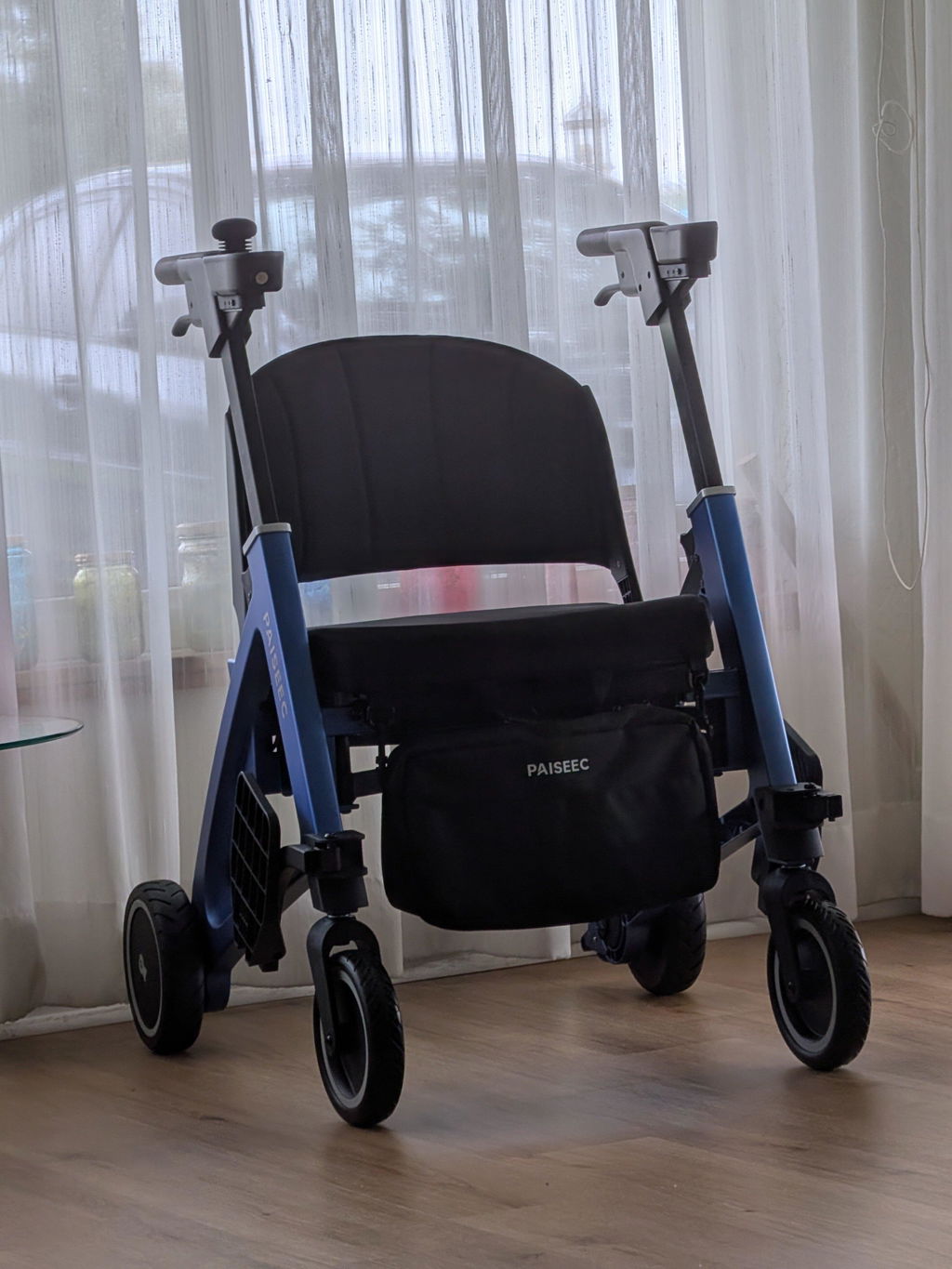
Paiseec D3 Mobility Scooter
What Are the Safety Considerations for Indoor Mobility Scooters?
Indoor use requires specific safety attention:
Battery and Charging Safety
-
Store batteries in dry, temperature-controlled conditions
-
Inspect battery and charger regularly for damage
-
Do not bypass BMS (battery management system) or modify battery packs
Operation Safety
-
Avoid overloading beyond weight capacity (typically 265–300 lbs for indoor models)
-
Do not use on unsafe slopes or wet conditions
-
Maintain proper tire condition for floor traction
-
Use speed controls appropriate for indoor space size
Floor Surface Compatibility
How Do You Choose Between a Mobility Scooter and Electric Wheelchair for Indoor Use?
The decision depends on your primary needs:
Mobility Scooter vs. Electric Wheelchair Decision Matrix
For electric wheelchair users with medical seating, posture, pressure, or long-term mobility needs, involve a qualified occupational therapist, physical therapist, or RESNA-certified ATP.
What Do Paiseec Experts Recommend?
"When selecting an indoor mobility scooter, buyers should first measure their narrowest doorway and hallway width. A 3-wheel model typically provides the tightest turning radius for tight corners in older homes. For users who need both indoor and outdoor capability, choose a scooter with scuff-free tires and adequate range. Always verify weight capacity, turning radius, and battery charging safety before purchase. Paiseec's compact scooters are engineered for both environments with safety features like the PAI intelligent safety system for turn and slope speed control."
— Paiseec Mobility Product Team
Conclusion
The best indoor mobility scooter for your space depends on turning radius, doorway width, and whether you need folding portability. Three-wheel models offer superior maneuverability in narrow halls, while Paiseec scooters like the S1, S3, and D3 provide compact designs with 25-mile ranges and safety features for indoor/outdoor versatility.
Actionable takeaways:
-
Measure your narrowest doorway and ensure scooter width is 2–3 inches narrower
-
Prioritize 3-wheel designs for turning radius under 35 inches
-
Verify weight capacity (typically 265–300 lbs for indoor models)
-
Check for scuff-free tires if you have laminate or glossy floors
-
Confirm battery charging safety and use only approved chargers
-
Contact Paiseec for product details, support, or dealer inquiries
FAQs
What turning radius do I need for indoor mobility scooters?For narrow hallways and older homes, aim for 30–34 inches. This allows a 180° turn in just 30–34 inches of space. Three-wheel scooters typically achieve the tightest radii.
Are 3-wheel or 4-wheel scooters better for indoors?3-wheel scooters are better indoors due to their tighter turning radius and narrower base. 4-wheel models offer more stability for outdoor rough terrain but turn less sharply.
Can Paiseec mobility scooters be used indoors?Yes. Paiseec states all their mobility scooter models are designed to be compact with small turning radii for indoor use, plus features like scuff-free tires and adjustable tillers.
What weight capacity should I look for in an indoor scooter?Most indoor scooters have 265–300 lbs capacity. If you're close to 300 lbs, consider heavy-duty models with higher capacity.
Do indoor mobility scooters damage floor surfaces?Models with scuff-free tires won't damage laminate, tile, or glossy floors. Verify tire type before purchase if you have sensitive flooring.


Leave a comment
This site is protected by hCaptcha and the hCaptcha Privacy Policy and Terms of Service apply.